Trending

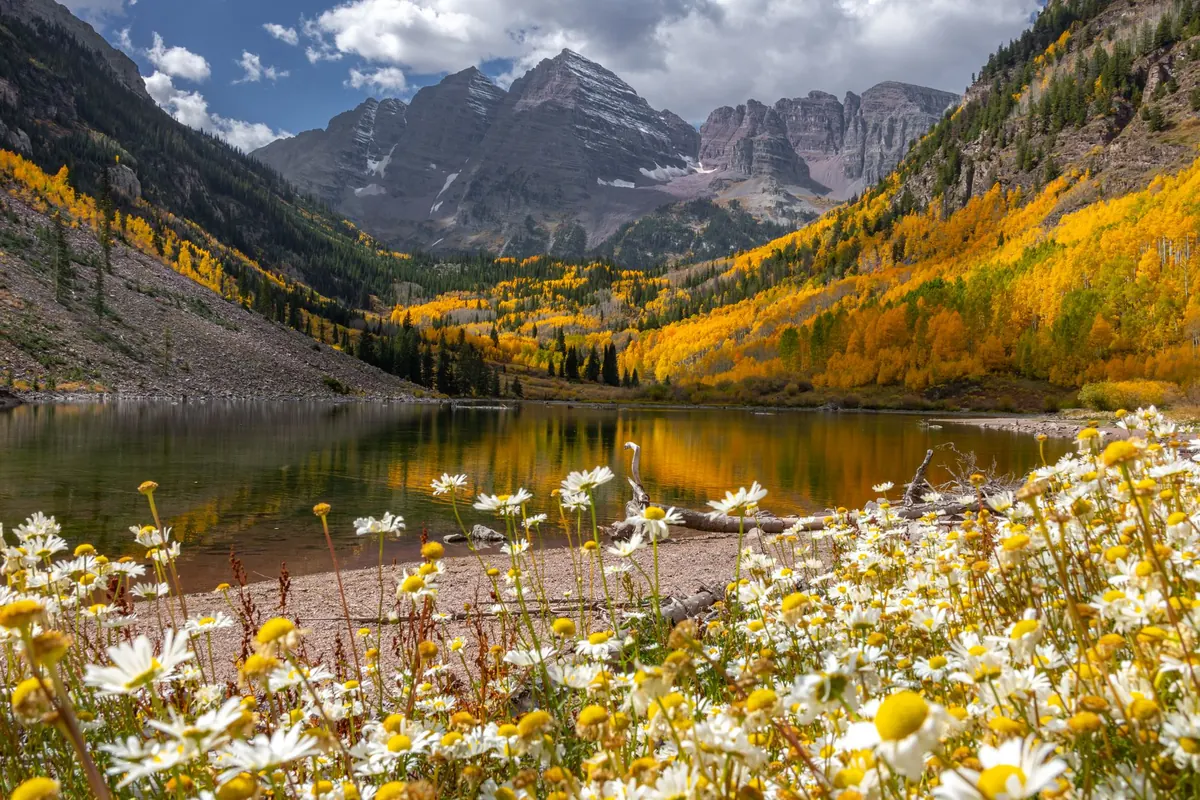
The Maroon Bells are two peaks at the head of a glacial valley roughly ten miles south-west of Aspen, Colorado, and the view from Maroon Lake — those striated, reddish flanks doubled in still water, a meadow in front — is why people build whole holidays around them. It is also a place with a booking system, a shuttle, a short season and a very small car park. The difference between a superb morning and a wasted one usually comes down to logistics, not fitness. Here is how access works, where you can leave the car, which trails to choose and when to go if you would rather not share the shoreline with a hundred other people at noon.
Maroon Creek Road winds up a narrow valley and simply stops at the lake. There are only a handful of spaces at the top, which is the root of the whole problem. To stop the area being overrun, the road is closed to private vehicles during the day for most of the season — broadly from late spring until the end of October — and a shuttle runs from Aspen Highlands Village instead. Outside those hours the barrier lifts and you can drive up yourself, subject to the parking rules in force at the time.
The details do shift. Shuttle timings, the exact hours of the vehicle closure and whether a parking reservation is required have all been adjusted in recent seasons, and wildfire closures can shut the road altogether with little notice. Confirm the current arrangements with the Aspen-Sopris Ranger District or the booking system before you plan a day around it.
There are two ways up, and both are managed through the same federal recreation booking system.
If you are booking from the UK, work through it in this order:
A fee applies to both shuttle seats and parking reservations, and it is payable online at the time of booking rather than at the barrier.
Aspen Highlands Village is the main intercept point, with a multi-storey car park a short walk from the shuttle stop. Parking there is generally included when you travel by shuttle, but check for seasonal changes.
Do not be tempted to leave the car on the shoulder of Maroon Creek Road. It is a working mountain road with no verges, and vehicles left there are ticketed or towed. If you are staying in Aspen itself, the town's buses run out to Aspen Highlands, which saves you the faff of moving the car at all. Backpackers on overnight itineraries should read the current advice carefully, as overnight parking is handled differently from day parking and is not simply a case of staying past the last bus.
Half a mile of level, hard-packed gravel looping the lakeshore, suitable for pushchairs and wheelchairs. This is where the classic photograph is taken, and it is worth every minute at sunrise.
Around 1.8 miles each way, climbing roughly 500 feet over loose, rocky ground to a small lake sitting directly beneath the Bells. Allow three hours there and back. Trainers will get you up in dry weather, but proper walking boots make the descent far more pleasant.
Buckskin Pass and Willow Lake both add serious climbing and reward you with far thinner crowds. The West Maroon Trail drops over the pass to Crested Butte, roughly ten and a half miles one way, and the Four Pass Loop is a backpacking circuit of around 27 miles that deserves three or four days. Wilderness camping rules apply: no camping at Maroon Lake itself, and you must camp well away from water and trails. Note that a self-issued wilderness permit is normally required at the trailhead, and some zones now carry extra restrictions — check with the ranger district.
Before 8am the light is at its best, the water is usually calm and the day-trippers have not arrived. Late afternoon, after the shuttle crowds have thinned, is the other sweet spot. Midday in July is the busiest and the least flattering hour.
Wildflowers peak from mid-July into early August. Aspen colour arrives in the second half of September and the first days of October, and it is spectacular — which is precisely why that fortnight is the hardest period to book. Late June can still mean snow above the treeline, and by mid-October you should expect winter conditions at altitude. If you want the Bells largely to yourself, aim for a weekday in early September: flowers gone, crowds gone, weather often still settled.
Maroon Lake sits just under 9,600 feet, which is high enough to notice. Take the first day gently, drink more water than feels necessary, and treat a persistent headache with nausea as a signal to descend rather than push on. If you have a heart or lung condition, or you are pregnant, speak to your doctor before travelling to this kind of elevation.
Summer afternoons in the Rockies regularly produce thunderstorms. Plan to be off exposed ridges and passes by early afternoon, and turn back if the sky darkens and the wind picks up. This is black bear and moose country: store food properly, never leave a rucksack unattended and give moose a wide berth, especially cows with calves.
Photo: Sergey Guk / Pexels